
Rotary Pneumatic Actuators
Reliable Pneumatic Valve Actuators for Industrial Automation
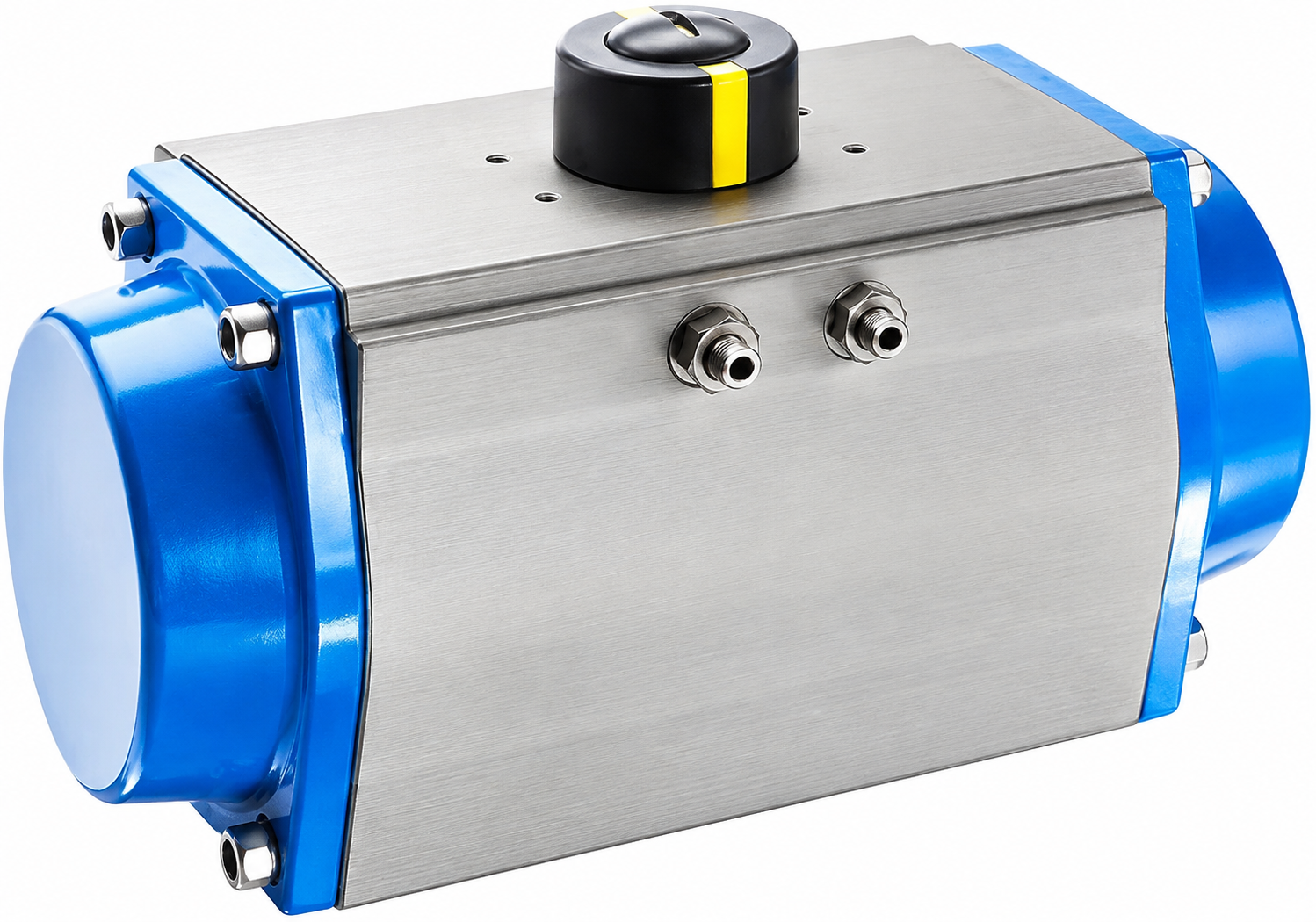
Rotary Pneumatic Actuators convert compressed air energy into rotational mechanical motion to automate and control industrial valves. They are widely used as pneumatic valve actuators for quarter-turn valves such as ball valves, butterfly valves, plug valves, and industrial dampers.
Designed for fast, reliable, and safe valve operation, pneumatic rotary actuators are suitable for demanding applications across oil & gas, petrochemical, chemical, power generation, water & wastewater, food & beverage, pharmaceutical, and general process industries.
SMART CONTROL SYSTEM provides application-oriented pneumatic valve automation solutions for industrial facilities requiring reliable valve operation and process control.
Our Innovations
Industry Focused Products!
What Are Rotary Pneumatic Actuators?
A rotary pneumatic actuator is a mechanical device that converts compressed air into rotational movement. The actuator generates torque through an internal mechanism and transfers this torque to the valve shaft to open, close, or control the valve.
Depending on the application, rotary pneumatic actuators are available in:
- Rack and pinion designs
- Scotch yoke designs
- Double-acting configurations
- Spring-return configurations
Spring-return pneumatic actuators can provide a defined fail position in the event of air supply failure, making them suitable for applications where process safety and emergency valve positioning are important.
How Does a Rotary Pneumatic Actuator Work?
The operating principle of a pneumatic rotary actuator is straightforward:
- Compressed air enters the actuator through the pneumatic air connection.
- Air pressure acts on pistons or an internal scotch yoke mechanism.
- The pneumatic force is converted into rotational movement.
- The actuator shaft rotates the connected valve.
- Depending on the actuator configuration, the valve opens, closes, or moves to a predefined fail position.
A double-acting actuator uses compressed air for both opening and closing operations, while a spring-return actuator uses compressed air in one direction and mechanical springs for the return stroke.

Rotary Pneumatic Actuator for Valve Automation
Rotary pneumatic actuators are widely used for quarter-turn valve automation.
They can be combined with pneumatic and electrical accessories to create complete automated valve control systems, including:
- Solenoid valves
- Limit switches
- Valve positioners
- Position sensors
- Air filter regulators
- Pneumatic accessories
- Valve monitoring systems
This configuration enables reliable open/close control, position feedback, and automated process control.
Key Advantages of Rotary Pneumatic Actuators
Fast Valve Operation
Pneumatic actuators provide rapid valve opening and closing, making them suitable for applications requiring fast response.
High Torque Output
Depending on the actuator design and size, pneumatic rotary actuators can deliver high torque for reliable operation of industrial valves.
Reliable Industrial Operation
The robust mechanical design provides reliable operation in demanding industrial environments.
Suitable for Hazardous Areas
Pneumatic actuation can be advantageous in hazardous environments where electrical actuation may require additional protection and certification.
Compact and Lightweight Design
Many rack-and-pinion pneumatic actuators provide a compact solution for automated quarter-turn valves.
Fail-Safe Operation
Spring-return configurations can be designed to move the valve to a predefined fail-open or fail-closed position when the pneumatic air supply is lost.
Low Maintenance
The simple mechanical construction of pneumatic actuators can provide long service life with appropriate installation and maintenance.
Applications of Rotary Pneumatic Actuators
Rotary pneumatic actuators are used in a wide range of industrial applications, including:
- Oil & Gas
- Petroleum and Refining
- Petrochemical
- Chemical Processing
- Power Generation
- Water & Wastewater Treatment
- Food & Beverage
- Pharmaceutical Manufacturing
- General Manufacturing
- Process Automation
Typical valves and equipment operated by pneumatic rotary actuators include:
- Ball Valves
- Butterfly Valves
- Plug Valves
- Industrial Dampers
- Quarter-Turn Valves
Pneumatic Actuator for Ball Valves
Ball valves are commonly automated using rotary pneumatic actuators because they require a quarter-turn movement for opening and closing.
A correctly selected pneumatic actuator provides the required torque to operate the ball valve reliably throughout its operating cycle.
Pneumatic Actuator for Butterfly Valves
Butterfly valves are another common application for pneumatic rotary actuators. The actuator rotates the valve disc through its operating range and enables automated flow control.
Proper actuator sizing should consider valve torque, operating pressure, temperature, media characteristics, and required safety position.
Installation of Rotary Pneumatic Actuators
Proper installation is essential for reliable pneumatic valve automation.
Recommended installation practices include:
- Mount the actuator to the valve using the appropriate mounting interface.
- Use ISO 5211 mounting standards where applicable.
- Ensure correct alignment between the actuator shaft and valve stem.
- Verify that the actuator provides sufficient torque for the valve.
- Connect the compressed air supply using suitable pneumatic fittings.
- Install an appropriate air filter regulator.
- Install a solenoid valve according to the control philosophy.
- Install limit switches or position sensors where feedback is required.
- Install a positioner for applications requiring modulating control.
- Perform functional testing after installation.
Technical Specifications
Parameter | Specification |
Actuator Type | Rack & Pinion / Scotch Yoke |
Operation Mode | Double Acting / Spring Return |
Rotation Angle | 0° – 90° (standard), optional 120° or 180° |
Supply Air Pressure | 3 – 8 bar |
Torque Output | 10 Nm – 10,000+ Nm |
Operating Temperature | -20°C to +80°C (depending on seals) |
Body Material | Aluminum Alloy / Stainless Steel / Carbon Steel |
Mounting Standard | ISO 5211 |
Control Options | Solenoid valve, Positioner, Limit switch |
Protection Rating | Suitable for hazardous and outdoor environments |
Technical specifications may vary according to actuator model, valve type, application conditions, and manufacturer configuration.
Selecting the Right Rotary Pneumatic Actuator
Correct actuator selection is critical for reliable valve operation.
SMART CONTROL SYSTEM can support actuator selection based on:
- Valve type
- Valve torque requirements
- Operating pressure
- Process temperature
- Valve size
- Operating frequency
- Required fail position
- Available instrument air
- Hazardous-area requirements
- Open/close or modulating operation
- Required accessories and control system
Our engineering approach helps customers select the appropriate pneumatic actuator and valve automation solution for their specific process requirements.
Why Choose SMART CONTROL SYSTEM?
SMART CONTROL SYSTEM provides industrial automation, valve automation, instrumentation, and process control solutions for industrial facilities.
Our technical approach combines product selection with application engineering to help customers achieve reliable, efficient, and safe process operation.
We support customers from technical consultation and product selection through engineering, supply, installation, commissioning, and technical support.
Need a Pneumatic Valve Actuator?
If you are looking for a reliable rotary pneumatic actuator, pneumatic valve actuator, or quarter-turn valve automation solution, contact SMART CONTROL SYSTEM.
Our technical team can help you determine the appropriate actuator type, torque, configuration, and accessories for your application.
Contact SMART CONTROL SYSTEM for your pneumatic valve automation requirements.