
Thermal Mass Flowmeter
Product Overview
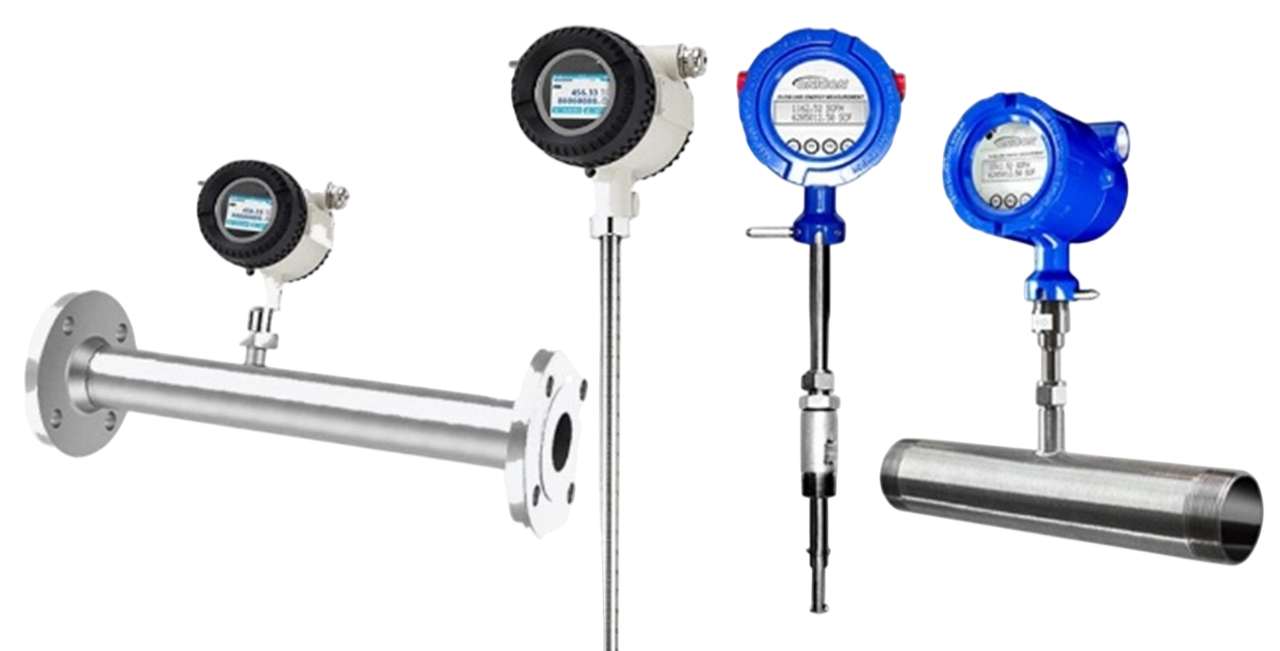
A Thermal Mass Flowmeter is an advanced measurement instrument designed to accurately measure the mass flow rate of gases. Unlike other flow meters that measure the volume of gas, thermal mass flowmeters directly measure the mass flow, making them ideal for applications where gas composition or density may change. These devices are commonly used in industries such as energy, environmental monitoring, chemical processing, and HVAC systems.
Our Innovations
Industry Focused Products!
How it works (simple explanation)
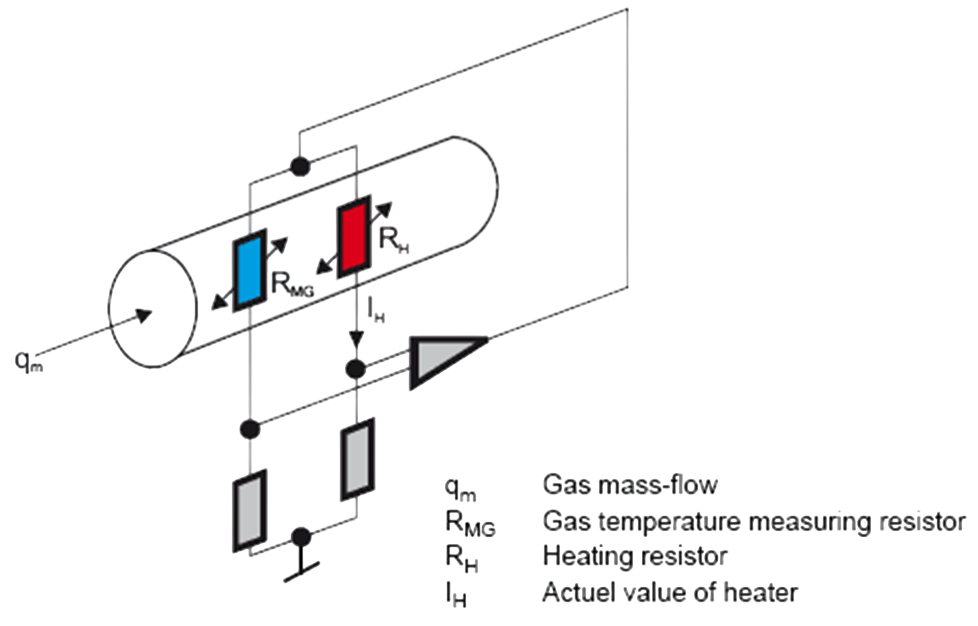
Thermal mass flowmeters operate on the principle of heat transfer. A heating element is placed within the flow path of the gas. As gas passes over the heated element, it absorbs heat, and the temperature of the gas rises. A sensor detects the temperature difference between the heated element and a reference sensor. The rate at which the gas absorbs the heat is directly proportional to the mass flow rate of the gas.
This method is highly effective because mass flow is determined directly, regardless of pressure or temperature fluctuations. It provides more consistent and accurate readings for varying gas flows, unlike volumetric flowmeters that require adjustments for changes in pressure and temperature.
What it measures
- Mass flow rate of gases (kg/h, lb/min, etc.) – primary measurement
- Gas flow of various types: air, natural gas, nitrogen, oxygen, carbon dioxide, hydrogen, and other industrial gases
- Temperature differential: measures the difference in temperature between the heated sensor (which is exposed to the flowing gas) and a reference sensor (which is exposed to the ambient gas)
- Gas composition (indirectly)
- Flow velocity (indirectly) – secondary measurement
Key advantages
- Direct mass flow measurement
- No moving parts
- Versatile gas measurement
- Cost-effective and compact
- Real-time monitoring
- Automatic temperature compensation
- High accuracy
- Wide range of applications
- Reduced complexity
- Energy efficiency
Applications
- Energy management
- Environmental monitoring
- HVAC systems
- Chemical & Pharmaceutical industries
- Oil & Gas
- Food & Beverage processing
- LNG, fuels, H2 and specialty fluids
Installation
- Installed in the correct orientation, with the flow direction matching the arrow on the meter
- Can be installed in horizontal or vertical pipelines
- Straight pipe runs required (the manufacturer’s recommendations for spacing before and after the flowmeter)
- Suitable for indoor and outdoor installations
- Optional remote or integral transmitter
Technical Specifications
Parameter | Specification |
Flow Measurement | Mass Flow Rate (kg/h, lb/h, or user-defined units) |
Gas Types | Air, Nitrogen, Oxygen, Hydrogen, Natural Gas, CO₂, and other industrial gases |
Flow Range | Typically 0.05 to 1000 Nm³/h (varies by model and application) |
Accuracy | ±1% of reading or better, depending on model and calibration |
Operating Pressure | 0 to 100 bar (depending on model) |
Operating Temperature Range | -20°C to 80°C (some models can operate in more extreme environments) |
Sensor Type | Thermal sensor with heated element and temperature differential measurement |
Output Signal | 4-20 mA, Modbus RTU, HART, or other digital protocols (depending on model) |
Power Supply | 12-24 VDC or 100-240 VAC (depending on model) |
Process Connection | Flanged, threaded, or insertion types (depending on application) |
Response Time | Typically 0.5-1 second |
Enclosure Rating | IP65, IP67 (depending on the model and environmental requirements) |
Display | Local digital display or remote display via control system (optional) |
Calibration | Factory-calibrated for common gases, user calibration for specific gases required |
Certifications | ATEX, FM, UL (depending on model and application) |